
Sanxingdui
Bronze Age site revealing a unique civilization in ancient China.

Gary Todd · CC0
Sanxingdui is an archaeological site and major Bronze Age culture located in modern Guanghan, Sichuan, China. The artifacts are displayed in the Sanxingdui Museum near Guanghan, and the site is on the UNESCO tentative list of World Heritage Sites along with the Jinsha site and tombs of boat-shaped coffins.
- Location
- Guanghan, Sichuan, China
- Period
- Bronze Age (12th–11th centuries BC)
- Culture
- Sanxingdui culture, linked to ancient kingdom of Shu
- Notable artifacts
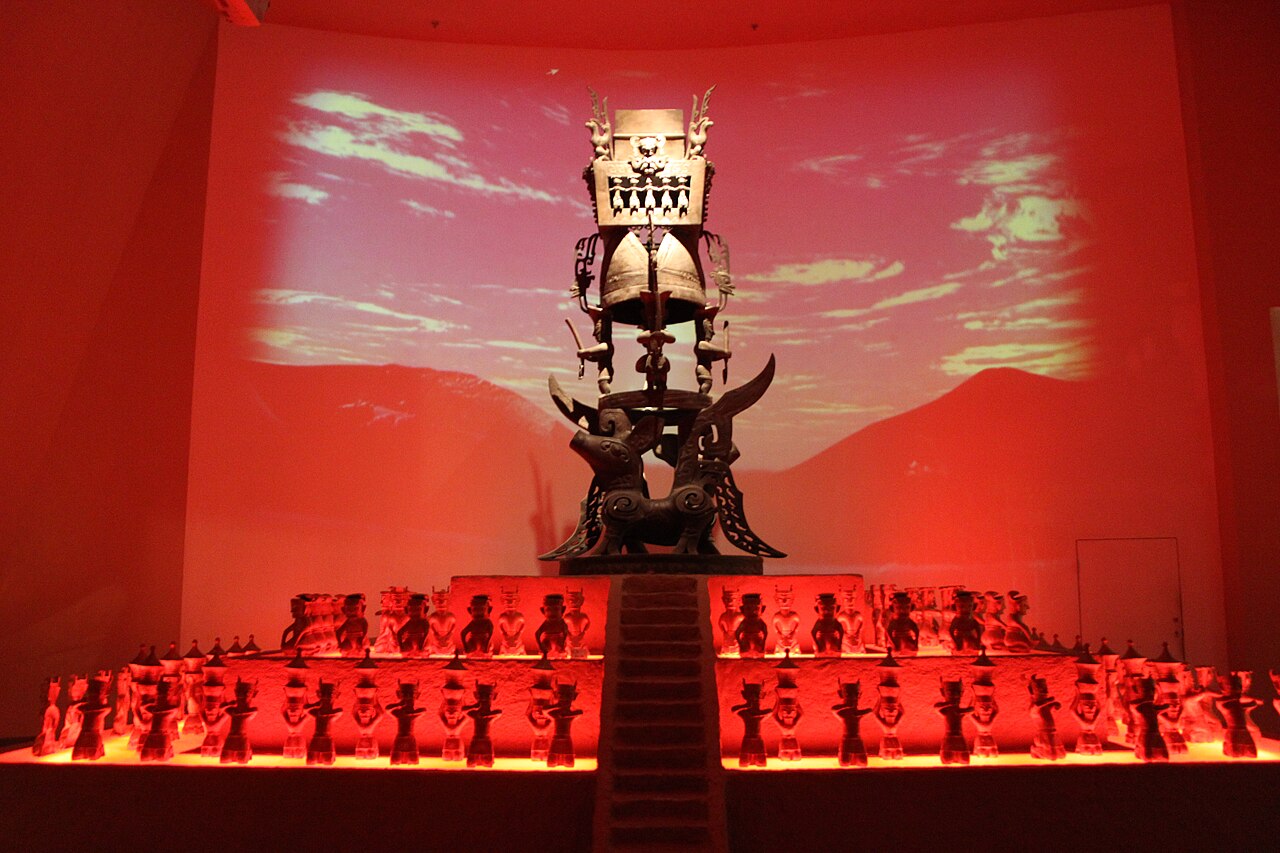
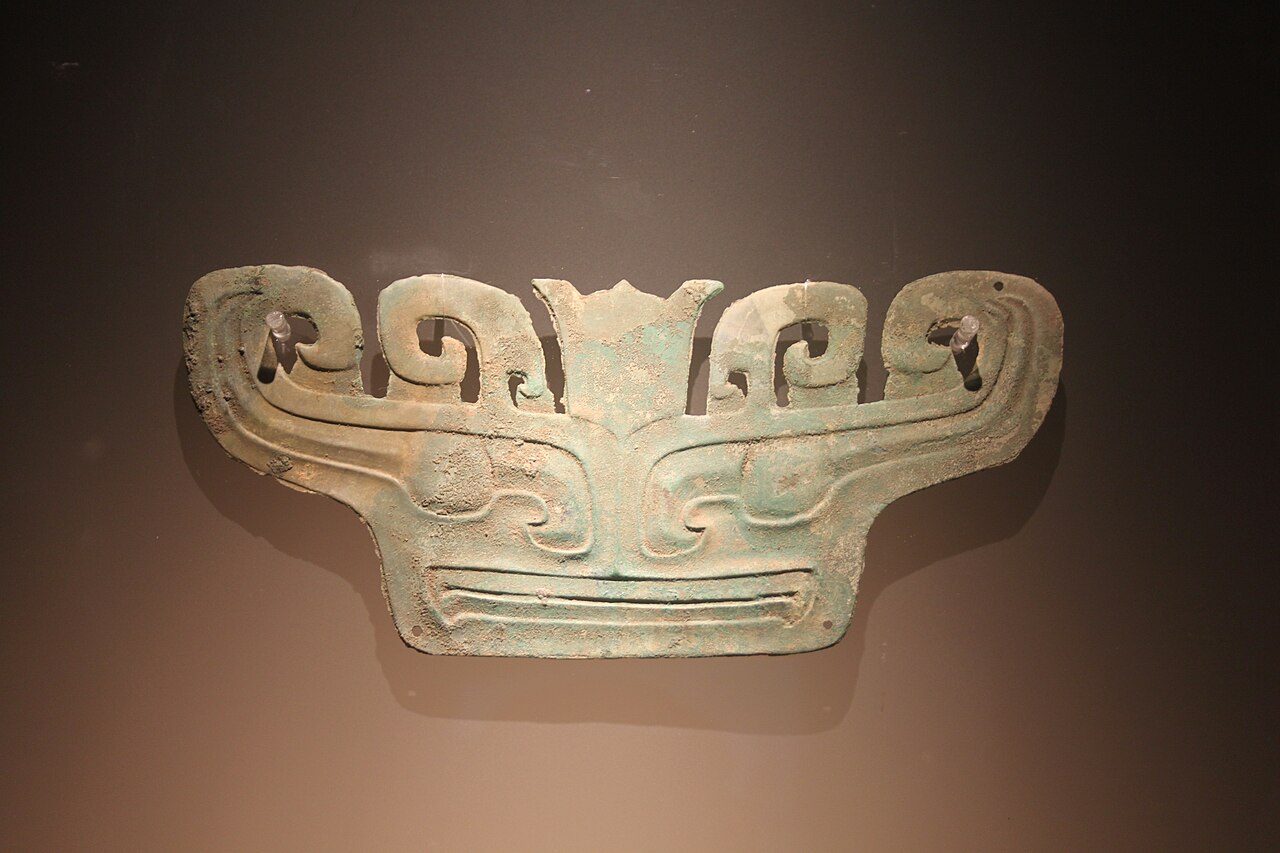
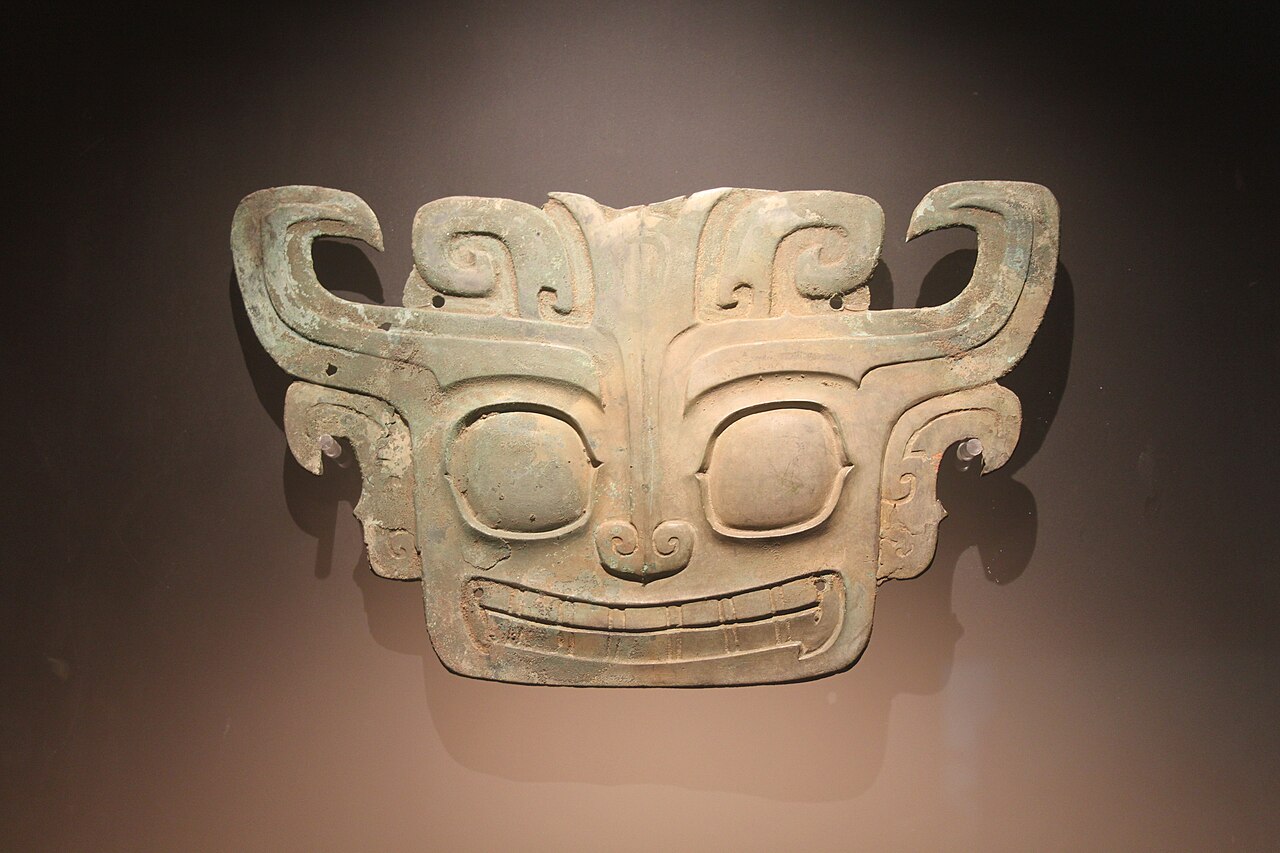
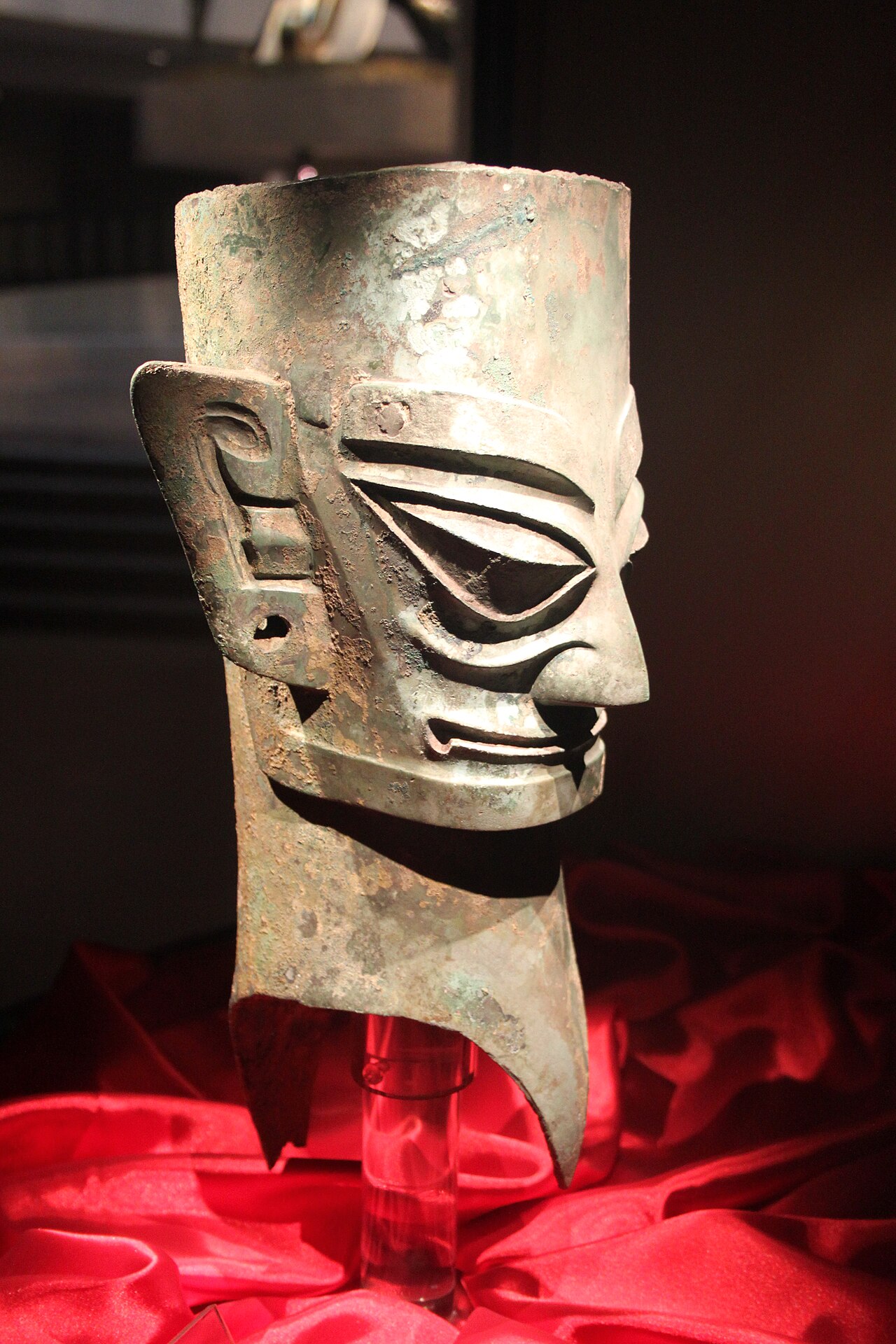
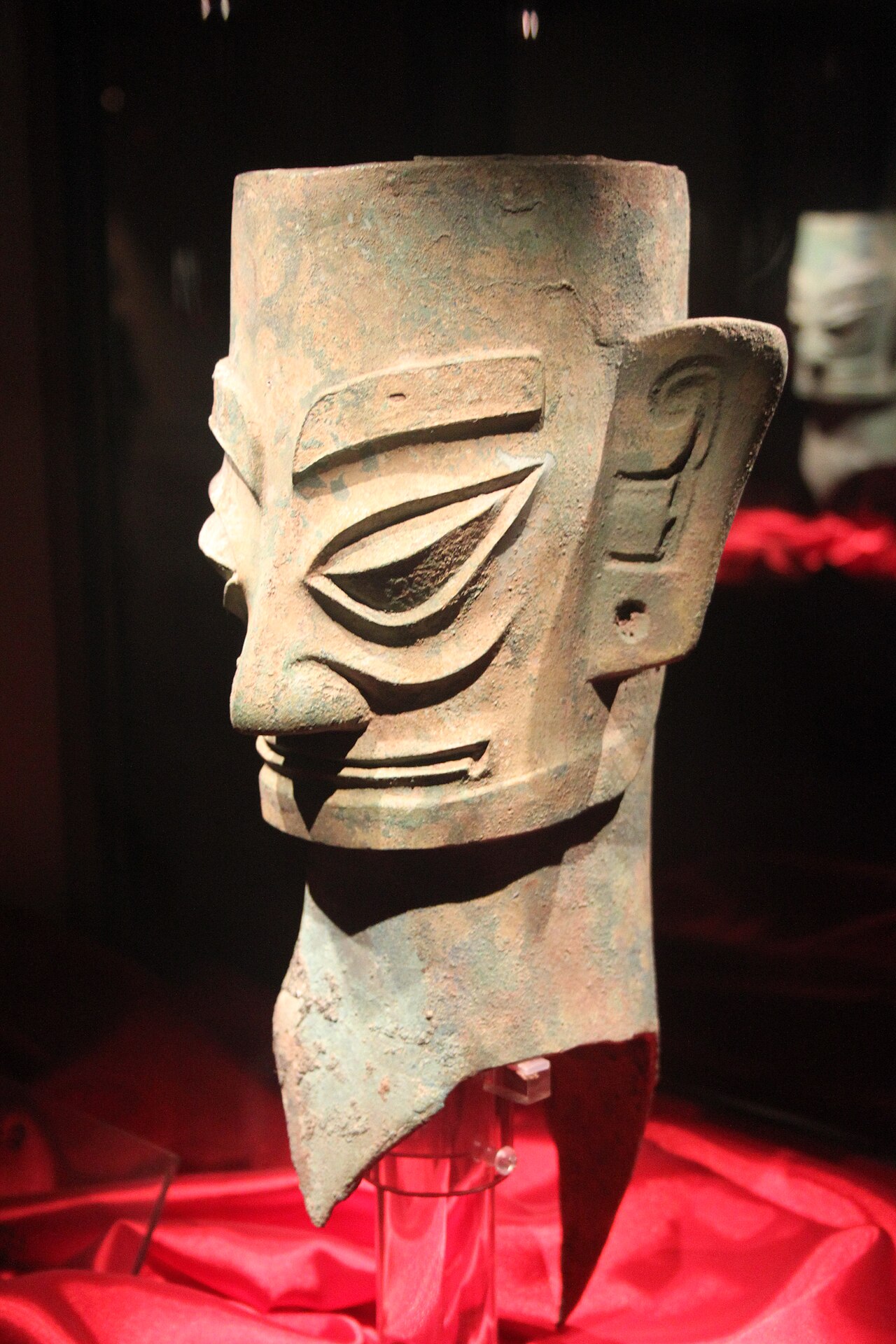
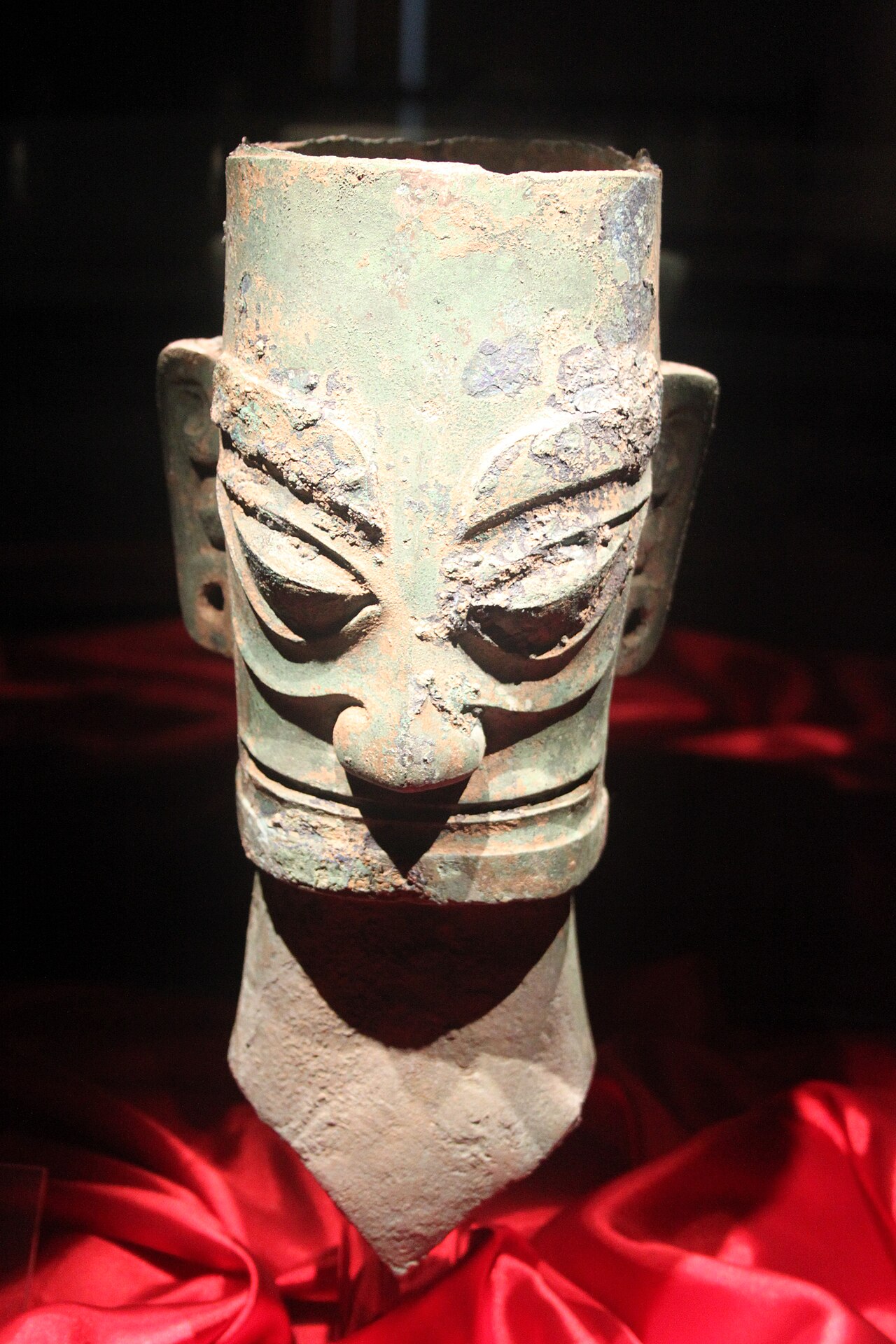
- Bronze masks, gold mask, bronze tree, life-sized standing human statue
- UNESCO status
- Tentative World Heritage Site
Lore & Background
In 1986, workers accidentally found sacrificial pits containing thousands of gold, bronze, jade, and pottery artifacts, many broken, burned, and carefully buried. A second pit was found a month later, containing bronze sculptures, masks, gold objects, jade items, ivory carvings, and clam shells, revealing an artistic style unknown in Chinese art history.
Reader's Guide
Sanxingdui represents a major Bronze Age civilization in southern China, contemporaneous with the Shang dynasty but with a distinct artistic style. The artifacts, including large bronze masks with protruding eyes and a gold mask, suggest a strong central theocracy with trade links to bronze from Yin and ivory from South Asia. The site's walled city, with canals for irrigation and defense, and its division into residential, industrial, and religious districts, indicate advanced urban planning. The culture's end may have resulted from natural disasters or invasion. Sanxingdui's significance lies in challenging traditional narratives of Chinese civilization as solely centered on the Yellow River, highlighting a unique Shu kingdom. Its inclusion on the UNESCO tentative list underscores its global importance.
Did You Know?
- The Sanxingdui site includes a walled city founded around 1600 BCE, with walls up to 10 meters high and canals for irrigation and defense.
- The site is linked to the ancient kingdom of Shu, mentioned in the Shiji and Shujing as an ally of the Zhou.
The Long Road to Discovery
Over the following years, many of these pieces drifted into private collections. The three visited the location, documented it with photographs and measurements, and secured a few items for the university museum. The story took a dramatic turn in 1986, when local workers accidentally uncovered sacrificial pits holding thousands of gold, bronze, jade, and pottery artifacts—many of which appeared to have been ritually broken, burned, and deliberately interred. A second pit, containing roughly 800 objects, was located just 20 to 30 metres away in August of that same year.
Artifacts That Defied Expectations
The objects pulled from the sacrificial pits stunned researchers with their unfamiliar artistic vocabulary. Bronze sculptures of humans and animal-faced figures, decorative dragons, snakes, chicks, and birds, ceremonial bells, and axes dominated the assemblage. Gold yielded tables, masks, and belts, while jade produced axes, tablets, rings, knives, and tubes. Ivory carvings and clam shells rounded out the collection. What struck scholars most was the complete absence of any parallel in the known history of Chinese art. Task Rosen, the British Museum's chief archaeological expert, judged the bronzes to be more outstanding than the famous Terracotta Army at Xi'an.
The Kingdom of Shu and Its Legendary Rulers
Many Chinese archaeologists have linked the Sanxingdui culture to the ancient kingdom of Shu, a polity mentioned in the Shiji and Shujing as a Zhou ally that defeated the Shang. The Chronicles of Huayang, compiled during the Jin dynasty, name a succession of legendary Shu kings: Cancong, Boguan, Yufu, and Duyu. Cancong is described as having protruding eyes—a feature echoed in many of the site's large masks and figures, leading some scholars to propose that these masks are portraits of him. Other eye-shaped objects found at the site hint at a broader cult of the eye. The fish- and bird-shaped artifacts have been interpreted as totems of Boguan and Yufu, whose name literally means 'fish cormorant.' The Yufu clan is considered the most likely candidate for the community behind Sanxingdui. A closely related site, Jinsha, lies 40 kilometres away and is thought to represent the relocated Shu capital, possibly the seat of the Duyu clan.
A Walled City and Its Modern Preservation
Excavations revealed a trapezoidal walled city founded around 1600 BCE, situated on the banks of the Yazi River and enclosing part of its tributary, the Mamu River. The east and south walls each stretched 2,000 metres, the west wall 1,600 metres, enclosing 3.6 square kilometres—an area comparable to the inner city of the Zhengzhou Shang City. The walls rose 8 to 10 metres in height, with a base width of 40 metres and a top width of 20 metres. Surrounding canals, 20 to 25 metres wide and 2 to 3 metres deep, served irrigation, inland navigation, defense, and flood control. The city was organized along a dominant central axis into residential, industrial, and religious districts, with timber-framed adobe halls, the largest being a meeting hall of about 200 square metres. Pit burials clustered on four terraces along this axis. The site now sits on UNESCO's tentative World Heritage list alongside Jinsha and the boat-shaped coffin tombs.
Gallery
Frequently Asked Questions
What is Sanxingdui?
Sanxingdui is a Bronze Age archaeological site in Guanghan, Sichuan, that represents a distinct pre-imperial civilization in southwestern China. Its artifacts are radiocarbon-dated to roughly the 12th and 11th centuries BC, making it one of the oldest known cultural complexes in the region.
What are the most famous artifacts from Sanxingdui?
The site is best known for its oversized bronze masks, a tall bronze sacred tree, a gold face mask, and a life-sized standing bronze figure — all stylistically unlike anything found at contemporary Central Plains sites.
Is Sanxingdui a UNESCO World Heritage Site?
It is currently on UNESCO's tentative list of World Heritage Sites, meaning it has been nominated but has not yet received full designation. The recovered artifacts are displayed in the Sanxingdui Museum near Guanghan for public viewing.
More in Chinese History 1-24
Elsewhere in the Chinese History universe
Spotted an error? Know more?
This is a living reference — every entry is fact-audited, and reader corrections feed straight into our audit queue. Suggest an edit · See this site's audit record