
Shanghai massacre
Violent suppression of communists in Shanghai by KMT forces.
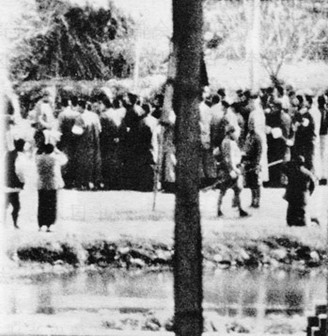
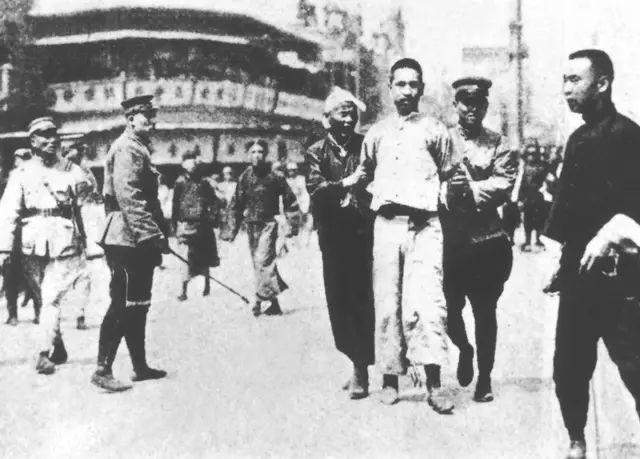
The Shanghai massacre of 12 April 1927, also known in China as the April 12 Purge or the April 12 Incident, marked the violent suppression of Chinese Communist Party (CCP) organizations and leftist elements in Shanghai by forces loyal to General Chiang Kai-shek and conservative factions within the Kuomintang (KMT). This event initiated a broader campaign of anti-communist repression across Nationalist China. Following the incident, conservative KMT elements conducted a full-scale purge of communists in all areas under their control, with violent crackdowns occurring in cities such as Guangzhou and Changsha. The purge deepened the existing rift between left-wing and right-wing KMT factions, leading to an open split. Chiang Kai-shek established himself as the leader of the right-wing faction, basing his government in Nanjing, in opposition to the original left-wing KMT government led by Wang Jingwei in Wuhan. By 15 July 1927, the Wuhan regime expelled the CCP from its ranks, effectively ending the First United Front—a working alliance between the KMT and the CCP under the guidance of Communist International (Comintern) agents. For the remainder of 1927, the CCP attempted to regain power through uprisings, including the Autumn Harvest Uprising and the Nanchang Uprising, which nominally began the Chinese Civil War. However, the failure of the Guangzhou Uprising severely diminished CCP strength, preventing further major urban offensives for years. The event is referred to in KMT historiography as the April 12 Purge, while communist historiography calls it the April 12 Counter-revolutionary Coup or the April 12 Massacre.
- location
- Shanghai, China
- perpetrators
- Forces supporting General Chiang Kai-shek and conservative KMT factions
- victims
- Chinese Communist Party members and leftist elements
- result
- Suppression of CCP in Shanghai; beginning of anti-communist purge; split between KMT left and right wings
Lore & Background
The Shanghai massacre of 12 April 1927, also known in China as the April 12 Purge or the April 12 Incident, was a violent suppression of Chinese Communist Party organizations and leftist elements in Shanghai. It was carried out by forces supporting General Chiang Kai-shek and conservative factions within the Kuomintang. This event marked the beginning of a broader anti-communist repression campaign across Nationalist China. Following the incident, conservative KMT elements conducted a full-scale purge of communists in all areas under their control, with similar violent suppressions occurring in Guangzhou and Changsha. The purge caused an open split between left-wing and right-wing KMT factions, leading Chiang Kai-shek to establish himself as leader of the right-wing faction based in Nanjing, opposing the original left-wing KMT government in Wuhan led by Wang Jingwei. By 15 July 1927, the Wuhan regime expelled the CCP from its ranks, effectively ending the First United Front—a working alliance between the KMT and CCP under the guidance of Communist International agents. For the remainder of 1927, the CCP fought to regain power, launching the Autumn Harvest Uprising and the Nanchang Uprising, which nominally began the Chinese Civil War. However, after the failure and crushing of the Guangzhou Uprising, CCP power was largely diminished, preventing another major urban offensive for years. The event is referred to in KMT historiography as the April 12 Purge, while communist historiography calls it the April 12 Counter-revolutionary Coup or the April 12 Massacre.
Reader's Guide
The Shanghai massacre marked a decisive turning point in Chinese history, ending the First United Front between the KMT and CCP and initiating a full-scale purge of communists in Nationalist-controlled areas. The purge led to the CCP's diminished power after failed uprisings, including the Autumn Harvest Uprising and Nanchang Uprising, which nominally commenced the Chinese Civil War. The massacre also reflected tensions between Chinese nationalism, Soviet influence, and Western concerns over the 'Bolshevik menace,' with Shanghai business interests and foreign powers pressuring Chiang to act against communist influence.
Did You Know?
- The event is known in KMT historiography as the April 12 Purge, and in Communist historiography as the April 12 Counter-revolutionary Coup or April 12 Massacre.
- Chiang Kai-shek enlisted Green Gang leader Du Yuesheng to form a rival union to oppose the communist-controlled Shanghai labor union.
The Purge and the Fracture of the Kuomintang
Far from being an isolated act, it ignited a broader campaign of anti-communist repression across Nationalist-controlled territory. Within weeks, similar violent suppressions erupted in Guangzhou and Changsha, as conservative KMT elements executed a full-scale purge of communists wherever they held authority. The political consequences were equally seismic: the event crystallized an open rupture between the KMT's left and right wings. Chiang Kai-shek consolidated his position as the leader of the right-wing faction, establishing his power base in Nanjing, while the original left-wing KMT government, under Wang Jingwei, held its seat in Wuhan. Two rival Nationalist governments now existed, each claiming legitimacy, and the unity that had defined the party's revolutionary project was shattered beyond repair.
The Fragile Soviet-Backed Alliance
The Soviet condition was clear: the KMT must cooperate with the nascent Chinese Communist Party. Sun accepted this on narrow terms—Communists could join the KMT as individual members but not as an organized bloc, and they were required to adhere to KMT ideology and discipline. In practice, however, Communist activities, often conducted covertly, quickly drew opposition among prominent Nationalist members. The Second KMT Congress deepened the tension, as the Central Executive Committee shifted decisively leftward, with six of its nine members identified as leftists or communists. The KMT remained fundamentally a bourgeois party, and the new radicalism alarmed landowning families who had backed its cause. Internal factional conflict over the United Front persisted right up to the launch of the Northern Expedition, leaving the alliance perpetually on the verge of collapse.
The Road to April: Escalation and Betrayal
The months preceding the massacre saw a rapid intensification of personal and political antagonisms. In mid-February, Nationalist troops seized Hangzhou. Then, on 1 March, the leftist-dominated government reorganized the Military Commission, placing Chiang under its jurisdiction while secretly plotting his arrest. Chiang learned of the scheme, and this betrayal most likely cemented his resolve to purge the CCP from the KMT entirely. When the Third Plenum opened in Hankou on 6 March, it was dominated by leftists and communists. Chiang boycotted the session, and in his absence a leftist Political Council was established to subordinate the military. Mao Zedong used the forum to deliver an extended address on his Hunan report and peasant land reforms. Meanwhile, in Shanghai, Communists under Zhou Enlai and Chen Duxiu had just led union workers to victory against Zhili clique warlord forces on 21–22 March, occupying the city's urban areas ahead of the NRA's arrival.
Aftermath, Naming, and the Long Civil War
The event's legacy is encoded even in its competing names. KMT historiography calls it the April 12 Purge, framing it as a party-cleansing operation, while Communist historiography labels it the April 12 Counter-revolutionary Coup or the April 12 Massacre, emphasizing the violence and betrayal. The Autumn Harvest Uprising and the Nanchang Uprising, the latter nominally marking the start of the Chinese Civil War, represented desperate attempts to reassert revolutionary momentum. Yet the crushing of the Guangzhou Uprising dealt a devastating blow, leaving the CCP's strength largely diminished. For years afterward, the party was unable to mount another major urban offensive, a strategic constraint that would shape its revolutionary trajectory for a generation.
Gallery
Frequently Asked Questions
Who is responsible for the Shanghai massacre?
The purge was executed by military and paramilitary forces aligned with Chiang Kai-shek and the right-wing factions within the KMT. They targeted CCP organizers and sympathetic workers throughout the city.
What happened after the Shanghai massacre?
The crackdown effectively crushed CCP organizational presence in Shanghai and kicked off a broader wave of anti-communist repression across Nationalist-controlled territory. It also drove a permanent wedge between the left-leaning and right-leaning wings of the Kuomintang.
Why is the Shanghai massacre a turning point in Chinese history?
It marked the moment the KMT–CCP alliance of the First United Front collapsed into open hostility. The event set the stage for years of civil war and fundamentally reshaped the political landscape of 20th-century China.
More in Chinese History 1-24
Spotted an error? Know more?
This is a living reference — every entry is fact-audited, and reader corrections feed straight into our audit queue. Suggest an edit · See this site's audit record